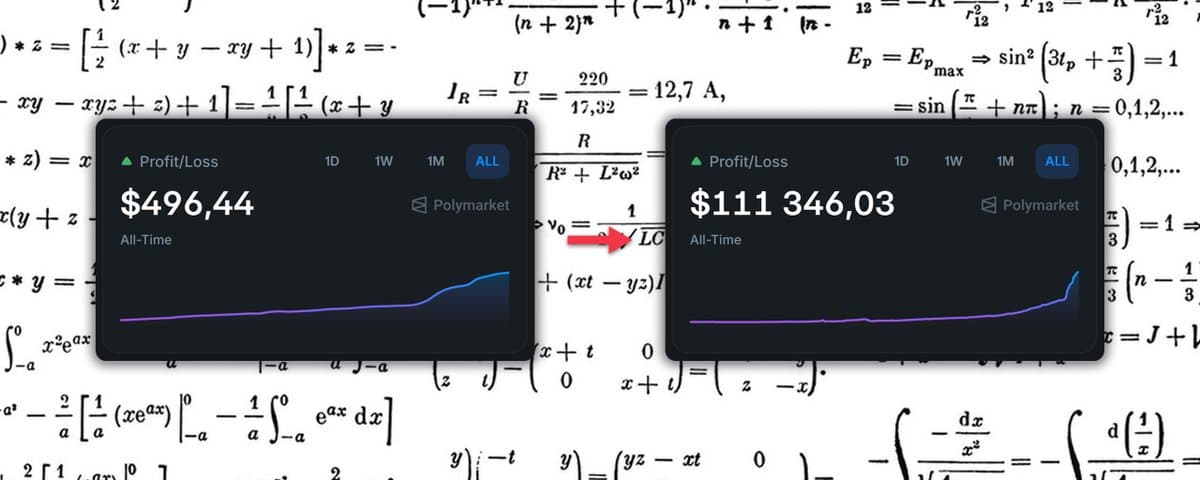
Most people treat Polymarket like a casino
They open a market, guess the outcome, click YES or NO, and hope they’re right, ending up with huge losses
And there where I've been for a couple of months before...
I spent weeks analyzing on-chain data and one thing becomes obvious:
Some wallets consistently win, so question arises: how?
And the reason you can detect them is simple
Polymarket is transparent in a way most trading platforms are not
Why Copy Trading Is Even Possible On Polymarket
On most exchanges, trade activity happens inside a private database. You see price and volume, but you don’t see who placed the trades
Polymarket works differently
It runs a hybrid decentralized order book:
- orders are matched off-chain
- trades settle on-chain
- balances exist as blockchain tokens
Every executed trade settles on Polygon through the exchange contract
That means:
- every position belongs to a wallet
- every entry price is observable
- every historical trade can be reconstructed
Positions themselves are represented as ERC-1155 outcome tokens
For a binary market:
YES token NO token
Each pair represents $1 of collateral
If the outcome resolves YES, the YES token is redeemed for $1 and the NO token becomes worthless
Because these tokens live on Polygon, every wallet’s positions and transfers can be tracked
This is the foundation that makes copy trading possible
The Real Edge: Wallet Transparency
Once you start analyzing wallet activity, the market looks completely different. Instead of trying to guess the outcome of every event, you can focus on a smaller problem: Which traders consistently make money?
Polymarket provides enough data to answer that question
Through official APIs and on-chain indexing, you can access:
- wallet trade history
- entry prices
- realized PnL
- unrealized PnL
- open positions
- historical market activity
But copying random large wallets is a mistake
Most large traders are not directional traders
You first need to understand what type of wallet you're looking at
Three Types Of Polymarket Whales
When analyzing large wallets on Polymarket, three clear behavioral patterns appear
Understanding the difference is critical because only one category is worth copying
**
1. Directional Traders**
These are the wallets that usually hold a real informational edge
Their activity tends to look like this:
- relatively few trades
- large position sizes
- strong concentration in specific topics
For example, a wallet might only trade geopolitical markets or election markets
Typical position sizes range from $50K to $500K per trade
What distinguishes these traders is conviction
They enter positions early and hold long enough for their thesis to play out
Across long trade histories, many of these wallets maintain 60%+ win rates over dozens of trades
These are the wallets you want to track
**
2. Market Makers**
Market makers appear profitable, but their strategy is completely different
They often hold both sides of a market simultaneously
YES + NO
Their profits come from:
- spread capture
- maker rebates
- liquidity incentives
Copying them gives you no edge
You simply buy after they have already captured the spread
3. High-Frequency Bots
Some wallets execute hundreds of trades per day
These are usually automated systems trading short-duration markets
Particularly, 5-minute or 15-minute crypto prediction markets
These strategies depend on:
- extremely low latency
- rapid price updates
- execution speed
Even a delay of a few seconds converts their edge into a negative expected value
So if you copy this one, you need a great bot, not made by you, using Claude for 1 hour, that copies them fast.
The Biggest Copy Trading Mistake
Many people try to copy the wallets at the top of public leaderboards
This approach rarely works cause leaderboards only create visibility, visibility creates followers and followers destroy the edge
When thousands of traders watch the same wallet, the market moves before followers can enter. Instead of copying the most visible traders, you should focus on consistent but less obvious performers. The wallets that quietly generate profit without attracting attention
Evaluating Wallets Before Copying Them
Once you identify potential directional traders, the next step is evaluating their performance
Looking only at win rate is not enough
You need a structured scoring framework
Three metrics work particularly well for prediction markets
Metric 1 – Sharpe Ratio
The Sharpe Ratio measures risk-adjusted performance
Formula:
Sharpe = (average_return − risk_free_rate) / standard_deviation_of_returns
For prediction markets, the risk-free rate is essentially zero
What matters is consistency
Trader who occasionally wins huge but often loses is not reliable
Sharpe Ratio above 1.5 usually indicates consistent performance
Below 1.0 typically suggests unstable results
Metric 2 – Kelly Criterion
The Kelly Criterion determines optimal position sizing
Formula:
*f = (p x b − q) / b*
Where:
f = fraction of bankroll p = probability of winning q = probability of losing (1 − p) b = payout multiple
Example:
Buying YES at $0.40 pays $1 if correct
Profit multiple = 1.5
So: b = 1.5
If a wallet historically wins 60% of trades, the Kelly formula gives the theoretical optimal bet size
In practice, most traders use half-Kelly or quarter-Kelly to reduce risk
Metric 3 – Expected Value Per Trade
Expected value measures whether a trader actually generates an edge
EV formula:
EV = (win_rate x average_win) − (loss_rate x average_loss)
However, copy trading requires an adjustment
Your entry price will rarely match the original trader
So the formula becomes:
EV_copy = EV − slippage
On Polymarket, slippage can easily reach 1-3% per trade, especially in smaller markets
Wallets with low EV quickly become unprofitable after this adjustment
Why Copying One Whale Is Dangerous
Even highly skilled traders experience losing streaks
Following a single wallet creates unnecessary risk, and a better approach is building a wallet basket instead of copying one trader, you track a group of high-quality wallets within the same category
For example:
- geopolitical markets
- crypto markets
- sports markets
Basket typically contains 5-10 wallets with strong historical performance
Signals become much stronger when multiple traders take the same position
If several profitable traders independently enter the same outcome within a short time window, the probability that they are reacting to meaningful information increases
This creates a much more reliable signal than copying a single trader
Anti-Signals: Wallets You Should Avoid
Not every profitable wallet is worth copying
Some strategies look profitable on the surface, but completely break when copied with a delay
There are several clear warning signs
1. Leaderboards
Copying leaderboard wallets rarely works
Once a wallet becomes visible, hundreds of traders start watching it
By the time you enter the same trade, the price has already moved
2. High Trade Frequency
Wallets executing hundreds of trades per month are usually automated strategies
They rely on execution speed and microstructure advantages
Even small delays turn their strategy unprofitable
3. Small Sample Size
Avoid wallets with very small histories
Less than 100 trades usually means there is not enough data to separate skill from luck
Short winning streaks can happen purely by chance
4. Performance Decay
Historical performance does not guarantee future edge
A useful check is comparing recent results to long-term performance
If the recent win rate drops significantly compared to historical results, the strategy may already be losing its edge
How To Find Profitable Polymarket Wallets
Once you know what type of traders to look for, the next step is finding them
There are several ways to discover profitable wallets
1. On-chain scanning
Large transactions on the Polymarket exchange contract often reveal high-conviction traders
Tracking large trade sizes is one way to discover potential whale wallets
2. Analytics dashboards
Several analytics platforms track Polymarket activity and provide trader leaderboards, position tracking and market statistics
These dashboards make it easier to identify consistently profitable wallets
3. Data APIs
Polymarket exposes APIs that allow developers to access wallet trade history, positions and realized PnL
This makes it possible to build custom filters that automatically rank traders by performance
Once a wallet is identified, its historical behavior can be analyzed to determine whether the strategy is directional or structural
How A Copy Trading System Actually Works
Tracking profitable wallets manually quickly becomes impossible
Trades happen constantly across dozens of markets
A typical copy trading system, therefore, follows a simple pipeline
1. Trade detection
The system monitors market activity and detects when tracked wallets enter positions
2. Wallet filtering
Only trades from pre-selected high-quality wallets are considered.
3. Position sizing
Position size is calculated using predefined rules such as Kelly sizing or fixed risk limits.
4. Execution
The system replicates the trade by placing an order in the same market.
5. Risk management
Exposure limits prevent excessive risk concentration.
For example:
maximum 5% of portfolio per trade maximum number of open positions predefined stop conditions
This automation allows traders to follow multiple wallets simultaneously
Latency And Slippage
One of the biggest challenges in copy trading is execution delay
Even if trades are detected quickly, followers rarely enter at exactly the same price
Several factors contribute to this
1. Blockchain settlement time
Trades settle on Polygon blocks, which introduces small delays between execution and visibility
2. Market liquidity
Smaller markets can move quickly when large positions are opened
Even a small delay can change entry prices
3. Order book depth
If liquidity is limited, copying a large trade can cause noticeable slippage
For this reason, expected value calculations should always include a slippage adjustment
Strategies that appear profitable without slippage can become unprofitable once realistic execution costs are considered
From Research To Execution
Understanding the theory behind copy trading is one thing
Actually tracking wallets, monitoring trades and executing positions in real time is another. Manually doing this across dozens of markets is nearly impossible
That’s why I put together a step-by-step guide showing how to set up a Telegram copy trading bot that automates the entire process
It monitors profitable wallets, detects their trades and mirrors them automatically
Below is a step-by-step guide showing exactly how to set it up
TELEGRAM BOT SETUP GUIDE
Copy trading sounds easy until you try to do it yourself
I tested more than 10 different bots and went through 100+ configurations before finding something that actually works
Most setups fail for the same reasons:
- slow execution
- bad slippage control
- no wallet filtering
- no dynamic risk management
Here is the setup I currently use
**1. Open the bot
**t.me/poly_copytrade_bot?start=join
2. Top up your balance
Deposit enough funds to handle multiple trades at the same time. (you can deposit USDC too and swap it to USDC.e in bot if needed)
Copy trading works best when you can support 10+ simultaneous positions without running out of balance
3. Click “Target
This section is where you add the wallets you want to copy
**
4. Set target nickname**
This is simply a label so you can recognize which wallet you're tracking
5. Enter the wallet address
Paste the Polymarket wallet you want to follow
Make sure the wallet actually has consistent performance before adding it
6. Set spend limit
You can put the max amount you want to spend per target, so this way you can control budget, trades copied, redeemed with Loss or Win and go in circles
7. Set copy amount, fixed or percent
Choose the amount you want to copy per trade, or % of your balance you want to copytrade
If you have a Spendlimit, % will be taken from it, if not, then from your main balance
Your balance should be able to support at least 10 trades at once, otherwise, you may miss signals
8. Top Ups
Choose whether you want to top up, which means copytrade position you already have, if Target buys it again, or not
Usually, I make copytrading on a fixed amount with no top-ups, so I already count all RM in that
9. Choose Copy Mode
Auto – automatically copy every trade instantly Manual – receive a notification and approve each trade manually
I personally use Auto, because I receive 100+ trade alerts per day, which makes manual approval impractical
10. Set slippage tolerance
5% – safer, but may miss some fast-moving markets 10% – better fill rate in volatile conditions
I usually keep it at 5%, but if markets move quickly you may prefer 10%
11. Let the bot handle execution
Once configured, the bot will mirror every trade from the wallets you selected
You also receive sell notifs from targets, so you can know whether they hold or sold a position, you can disable them too if they're creating too much noise
Instead of monitoring markets all day, you can focus on finding new profitable wallets
Important: Copy Trading Is Not Fire-And-Forget
Most people lose money here
Copy trading requires constant monitoring
You should regularly review:
- which wallets remain consistent
- which traders changed their behavior
- which wallets started overtrading
- which traders suddenly increased position sizes
Bad wallets never announce they are about to start losing
Right now, I'm analyzing dozens of Polymarket wallets and filtering out the ones that are actually worth copying
So far, I've already found 3 high-performing wallets with consistent history:
First wallet Second wallet Third wallet
Each of them is a 5-15 min market trader with ~70% win rate over the last month
Bottom Line
While most still think that copytrading is smth like taking a wallet from leaderboard and copying, it will be a good time to enter
Right now, you can have an edge knowing all I mentioned and outperform 99% of ppl by actually trying and giving it 100% efforts
I am getting ~$2K-4K daily rn changing wallets time to time and controlling spendinglimit, while looking for new wallets
Hope you learned smth from this article and it will help you profit on Polymarket
I spent many hours writing this, so I would appreciate your support here, like rt and follow me, so you won't miss any of my future content